
Future Infrastructure in Navi Mumbai: Top 5 Projects to Watch
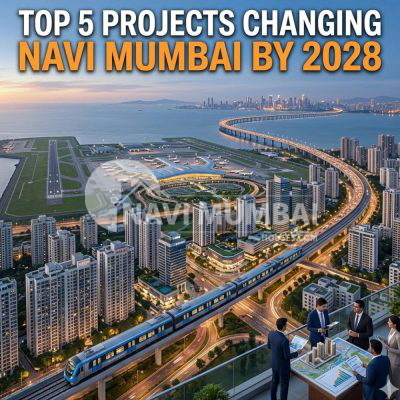
Future Infrastructure in Navi Mumbai is creating one of the most exciting real estate investment stories in the Mumbai Metropolitan Region. Real estate fortunes are rarely made by buying where development already exists. Instead, they are created by identifying where growth is heading next.
Over the last decade, Navi Mumbai has quietly transformed from a satellite city into one of India’s most promising real estate destinations. Meanwhile, better planning, wider roads, organized sectors, and rapidly improving connectivity have continued to attract both homebuyers and investors.
However, what many people fail to realize is that the biggest phase of Navi Mumbai’s growth is still unfolding.
Why Infrastructure Matters More Than Ever in Real Estate
Property prices do not rise simply because new buildings are launched. Instead, long-term appreciation is usually driven by infrastructure, employment generation, and improved connectivity.
Today, Navi Mumbai stands at a unique turning point. On one hand, the city already offers planned development, organized sectors, and relatively affordable property prices compared to Mumbai. On the other hand, multiple large-scale infrastructure projects are simultaneously moving toward completion.
As a result, investors are increasingly focusing on Navi Mumbai as one of India’s most promising real estate growth stories.
Moreover, infrastructure projects create a ripple effect across the economy. They improve connectivity, attract businesses, generate employment, increase housing demand, and ultimately support property value appreciation.
Furthermore, infrastructure-led urban development remains a key focus area for the Maharashtra Urban Development Department, which continues to support long-term growth across major cities, including Navi Mumbai.
Let’s explore the five infrastructure projects that are expected to reshape Navi Mumbai by 2028.
If you’re evaluating long-term growth opportunities, you may also want to explore our guide on Best Areas to Invest in Navi Mumbai in 2026, which explains how infrastructure influences property appreciation across emerging micro-markets.
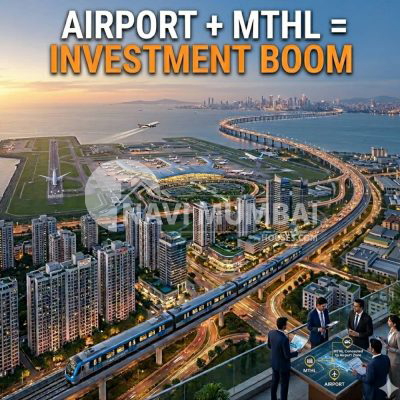
1. Navi Mumbai International Airport (NMIA)
The Project Everyone Is Waiting For
Without question, the Navi Mumbai International Airport is the most anticipated infrastructure project in the region.
Designed to reduce pressure on Mumbai’s existing airport while supporting future passenger demand, NMIA will likely emerge as one of India’s most important aviation hubs.
According to the latest updates from the Navi Mumbai International Airport Limited (NMIAL), the airport will play a crucial role in supporting future passenger and cargo demand across the Mumbai Metropolitan Region.
Why It Matters for Investors
Historically, airports have transformed entire micro-markets. For example, major developments near airports in Hyderabad, Bengaluru, and Delhi NCR witnessed substantial property appreciation over time.
Similarly, the Navi Mumbai International Airport is expected to:
- Generate thousands of direct and indirect jobs
- Attract multinational companies and logistics firms
- Boost commercial real estate demand
- Increase rental housing requirements
- Enhance domestic and international connectivity
Consequently, areas surrounding the airport are expected to witness increased buyer and investor interest.
Locations Expected to Benefit
The following areas are expected to gain significantly:
- Ulwe
- Pushpak Nagar
- Dronagiri
- Panvel
- Kharghar
- Taloja
Furthermore, many investors have already begun accumulating properties in these locations, anticipating strong long-term appreciation.
Additionally, investors looking specifically at airport-driven growth corridors should read our detailed analysis of Property Investment Near Navi Mumbai International Airport, where we break down the locations expected to benefit the most.
2. Mumbai Trans Harbour Link (MTHL) Growth Impact
The Sea Bridge That Changed Accessibility Forever
The Mumbai Trans Harbour Link has already changed how people perceive the distance between Mumbai and Navi Mumbai.
By significantly reducing travel time, the bridge has improved accessibility between South Mumbai and Navi Mumbai. As a result, several previously overlooked locations have become more attractive to homebuyers and investors.
Investors can also track regional connectivity projects through the Mumbai Metropolitan Region Development Authority (MMRDA), which oversees several transformative infrastructure initiatives across the region.
More importantly, the real story lies in what comes next.
Supporting infrastructure, commercial hubs, logistics parks, and residential developments are expected to emerge across MTHL-connected corridors over the coming years.
Why Investors Are Paying Attention
In fact, improved connectivity often triggers three powerful market forces:
- Increased buyer demand
- Higher rental absorption
- Commercial expansion
Consequently, locations near MTHL influence zones are witnessing growing interest from professionals seeking better lifestyles without Mumbai’s high property prices.
Key Beneficiary Locations
- Ulwe
- Nhava Sheva
- Uran Road
- Panvel
- Airport influence zones
Therefore, investors entering these markets before full-scale development could potentially benefit from future appreciation.
Furthermore, the impact of improved connectivity is already visible in several residential pockets. Our article on MTHL Impact on Navi Mumbai Property Prices provides a deeper look at these emerging opportunities.
3. Navi Mumbai Metro Expansion
Creating a Truly Connected City
While external connectivity grabs headlines, internal connectivity often determines everyday convenience.
This is where the Navi Mumbai Metro plays a crucial role.
The expanding metro network aims to connect major residential, commercial, and industrial hubs across the city, including:
- Belapur
- Kharghar
- Taloja
- Pendhar
- Panvel
- Airport influence areas
Why Metro Connectivity Matters
Additionally, properties near metro stations often enjoy:
- Better liquidity
- Higher rental demand
- Improved resale value
- Reduced commuting time
Furthermore, metro connectivity significantly improves quality of life for end-users by reducing travel stress and transportation costs.
At the same time, it improves property performance for investors through stronger demand and better occupancy rates.
Real Estate Outlook
Historically, metro-led infrastructure projects create sustained appreciation cycles rather than short-term spikes.
Therefore, locations benefiting from metro connectivity often remain attractive to both homebuyers and investors for years.
4. Coastal Road and Multi-Modal Connectivity Projects
A New Era of Regional Mobility
Navi Mumbai is no longer developing as an isolated urban center.
Instead, it is becoming an integral part of the larger Mumbai Metropolitan Region.
Several road, railway, and transportation initiatives are strengthening regional connectivity, including:
- Coastal connectivity projects
- Highway upgrades
- Railway modernization
- Multi-modal transport integration
Essentially, the objective is simple: reduce travel friction and support economic growth.
What This Means for Property Investors
As a result, when travel becomes easier:
- Businesses expand more rapidly
- Residential demand increases
- Commercial investments rise
- Employment opportunities grow
Consequently, areas once considered distant are becoming viable residential destinations.
This shift is already visible across Panvel, Karanjade, Uran, and surrounding growth corridors.
Long-Term Potential
Moreover, as Navi Mumbai becomes more integrated with Mumbai and neighboring regions, land scarcity in established locations may push demand toward emerging areas.
Therefore, investors entering these corridors early could benefit substantially from future growth.
5. NAINA (Navi Mumbai Airport Influence Notified Area)
The Hidden Giant Many Investors Still Underestimate
While airports and metro projects often receive most of the headlines, nevertheless, NAINA may ultimately become the most transformative development story in Navi Mumbai.
CIDCO envisions NAINA as a massive planned urban region surrounding the airport influence zone.
The vision includes:
- Residential clusters
- Commercial districts
- Educational institutions
- Industrial parks
- Smart infrastructure systems
Why NAINA Is So Important
The master planning and development framework for NAINA is being implemented by CIDCO, which has been instrumental in shaping Navi Mumbai’s planned urban growth for decades.
In fact, many successful global cities expanded around airport ecosystems.
Similarly, NAINA is designed to support long-term urban growth around the Navi Mumbai International Airport.
As infrastructure develops further, the region could emerge as one of Maharashtra’s largest organized urban development zones.
Investor Advantages
Consequently, early investors may benefit from:
- Lower entry prices
- Long-term appreciation potential
- Infrastructure-led demand growth
- Future commercial opportunities
Areas surrounding Panvel, Chirle, Ulwe, and neighboring corridors are already attracting growing investor attention.
For a more detailed understanding of future development plans, investors can also explore our guide on NAINA City and Future Investment Potential, which explains why this region continues to attract long-term investor attention.
What Most Investors Get Wrong About Infrastructure-Led Growth
One common misconception, especially among first-time investors, is that infrastructure completion marks the beginning of price appreciation. However, real estate markets rarely work that way.
In reality, the strongest gains often occur during the years leading up to project completion. By the time infrastructure becomes fully operational, a substantial portion of appreciation may already have taken place.
Therefore, experienced investors focus on future growth indicators rather than current popularity alone.
Specifically, they evaluate:
- Upcoming connectivity improvements
- Employment generation potential
- Population migration trends
- Government-backed development plans
As a result, they position themselves before demand becomes mainstream.
The Lifestyle Advantage Behind Infrastructure Growth
Beyond numbers and investment returns, infrastructure fundamentally changes how people live.
For example, shorter commutes mean more family time. Better connectivity means improved access to jobs, education, healthcare, and entertainment.
Moreover, well-planned infrastructure enhances the overall quality of life while making neighborhoods more desirable.
Consequently, property demand tends to rise naturally in locations where infrastructure creates genuine lifestyle improvements.
This is precisely why infrastructure-led growth often proves more sustainable than purely speculative price increases.
Common Investor Concerns
Have Property Prices Already Increased Too Much?
While certain micro-markets have already appreciated, several emerging locations still offer attractive entry points compared to Mumbai.
Therefore, investors who focus on future infrastructure influence zones may continue to find value opportunities.
Will All Projects Be Completed on Time?
Large infrastructure projects can occasionally face delays. However, Navi Mumbai continues to maintain a clear long-term development direction.
As a result, most long-term investors focus on the overall growth trajectory rather than short-term timelines.
Which Locations Offer the Best Potential?
The answer depends on your budget, investment horizon, and risk appetite.
Nevertheless, locations influenced by the airport, metro network, MTHL, and NAINA continue to attract the strongest investor attention.
Furthermore, working with a genuine local real estate advisor can help you identify opportunities based on data rather than market hype.
If you’re still deciding where to invest, our comparison of Navi Mumbai vs Thane: Where Should You Invest? can help you evaluate growth potential, affordability, and future infrastructure advantages.
Final Thoughts
The next chapter of Navi Mumbai’s growth will not be defined by residential projects alone. Instead, transformative infrastructure will reshape how people live, travel, and work.
Collectively, the Navi Mumbai International Airport, Metro expansion, MTHL influence zones, regional transport upgrades, and NAINA development plan create a powerful foundation for future growth.
Consequently, investors who understand these trends today may position themselves to benefit from tomorrow’s appreciation cycle.
Ultimately, opportunities of this scale do not appear every year.
By 2028, today’s emerging locations could evolve into tomorrow’s established investment hotspots.
The question is not whether Navi Mumbai will change.
The question is whether you choose to invest before that transformation becomes obvious to everyone else.