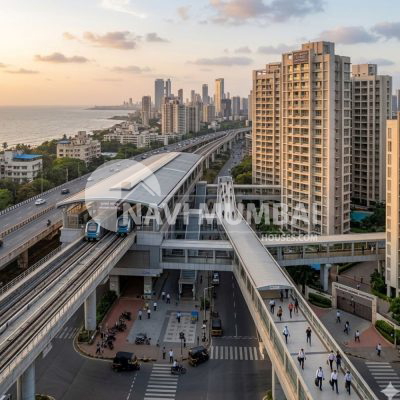
How Infrastructure Property Prices Change: A First-Time Buyer’s Guide
Infrastructure property prices can change dramatically when new metro lines, highways, airports, and business hubs are developed nearby. For first-time home buyers, understanding this relationship can mean the difference between purchasing a home that simply holds its value and one that grows significantly in worth over time. However, many buyers focus only on the property itself and overlook the infrastructure projects that often drive long-term appreciation.
Imagine buying a home in a quiet neighborhood where property prices seem affordable today. However, five years later, a new metro station opens nearby, a major highway connects the area to business hubs, and suddenly your property’s value has increased significantly.
This isn’t luck.
Rather, it’s the power of infrastructure.
What Is Infrastructure and Why Does It Matter?
Infrastructure refers to the physical systems that make a city function efficiently and support economic growth.
These include:
Metro rail networks
Highways and expressways
Airports
Railway stations
Flyovers and bridges
Business parks
Industrial corridors
Smart city projects
Water and sewage systems
Educational and healthcare hubs
When infrastructure improves, accessibility improves.
Consequently, more people are willing to live and invest in that location.
As a result, demand rises.
And when demand rises, property prices usually follow.
This relationship has been visible in almost every successful real estate market around the world. Therefore, understanding infrastructure trends can give first-time buyers a major advantage.
To verify upcoming infrastructure developments and government-backed projects, buyers should regularly check the official website of the Ministry of Road Transport & Highways (MoRTH) and relevant state planning authorities.
The Basic Formula: Better Connectivity = Higher Property Values
Think about your daily routine.
Would you rather spend two hours commuting to work every day or thirty minutes?
Most people naturally choose convenience.
That’s precisely why properties located near major transportation networks often command premium prices.
When a new metro line, expressway, or railway corridor is announced, buyers begin anticipating future convenience. As a result, investors move in early, demand increases, and property prices start rising even before the project is completed.
This is one of the reasons why early buyers often enjoy the highest capital appreciation.
How Infrastructure Projects Increase Property Prices
1. Improved Connectivity Attracts More Buyers
Connectivity is one of the strongest factors affecting real estate demand.
For example, when a new metro line reduces travel time between residential areas and employment hubs, people become more willing to relocate there.
A location that once required a 90-minute commute may become a 30-minute journey after a metro line or expressway is introduced.
As convenience improves:
More families consider moving there
Rental demand increases
Businesses begin expanding nearby
Property values rise
Therefore, accessibility creates desirability.
Moreover, desirability creates demand.
Ultimately, demand drives appreciation.
This is why locations with strong transport links consistently outperform poorly connected areas over the long term.
2. Commercial Development Follows Infrastructure
Infrastructure rarely arrives alone.
In fact, when governments invest heavily in roads, metro corridors, airports, or transport hubs, businesses often follow.
New developments typically include:
Corporate offices
Retail centers
Hospitals
Educational institutions
Entertainment zones
As a result, employment opportunities increase and attract a larger population.
People naturally prefer living close to workplaces and essential services. Consequently, residential demand strengthens significantly.
For property owners, this often translates into higher property values and stronger rental income potential.
3. Infrastructure Creates New Growth Corridors
Many of today’s premium real estate locations were once considered peripheral areas.
However, infrastructure changed their future.
Areas that were previously overlooked suddenly become attractive when connectivity improves.
Similarly, many emerging suburbs across India have witnessed rapid appreciation after metro expansions, expressway developments, airport projects, and industrial corridors were announced.
Because of this, early investors often enjoy substantial gains before an area becomes mainstream.
For first-time buyers, identifying these growth corridors early can create long-term wealth while keeping acquisition costs relatively affordable.
4. Better Infrastructure Improves Quality of Life
Property decisions are not purely financial.
After all, people buy homes to improve their lifestyles.
Infrastructure directly impacts:
Commute times
Access to healthcare
School connectivity
Shopping convenience
Recreational opportunities
Overall living comfort
When a location offers strong infrastructure, residents enjoy a smoother and more convenient daily experience.
As a result, more people seek homes in such areas.
Consequently, demand increases and property prices rise.
Therefore, infrastructure benefits both your lifestyle and your investment returns.
Real Estate Appreciation Happens in Stages
One common misconception among first-time buyers is that property prices rise only after a project is completed.
In reality, appreciation often happens in multiple phases.
Stage 1: Project Announcement
Initially, investors and informed buyers begin purchasing properties in the area.
As a result, prices start moving upward.
Stage 2: Construction Phase
As construction progresses, market confidence increases.
Meanwhile, developers launch new projects to capitalize on growing demand.
Consequently, prices continue to appreciate.
Stage 3: Near Completion
At this stage, connectivity benefits become visible.
Once the infrastructure becomes fully functional, demand often reaches its strongest levels.
As a result, property values may stabilize at significantly higher levels than they were before the project announcement.
This is precisely why timing matters.
Buying before the crowd notices often creates the greatest upside potential.
Additionally, buyers can track major infrastructure announcements and urban development initiatives through the National Infrastructure Pipeline (NIP), which provides insights into planned and ongoing projects across India.
Common Mistakes First-Time Buyers Make
Buying Solely Based on Current Prices
A cheaper property isn’t always a better investment.
Unfortunately, many buyers focus only on today’s price and ignore future growth drivers.
Instead, ask:
What infrastructure projects are planned nearby?
What is the expected completion timeline?
How will connectivity improve?
Are major commercial developments expected to follow?
By doing so, you can better evaluate long-term appreciation potential.
Before making any purchase decision, it is advisable to verify project approvals, regulatory compliance, and developer information through the official MahaRERAportal.
Not every infrastructure announcement delivers the expected results.
Sometimes projects experience:
Delays
Funding challenges
Route modifications
Regulatory hurdles
Therefore, it’s essential to verify information through official government sources and planning authorities.
Moreover, avoid making decisions based solely on marketing brochures or unverified claims.
A little research today can save significant disappointment tomorrow.
Ignoring Micro-Market Differences
Even within the same locality, appreciation can vary significantly.
For instance, a property within walking distance of a metro station may appreciate faster than another property located several kilometers away.
Similarly, homes closer to commercial hubs often experience stronger rental demand.
Therefore, studying micro-market dynamics is just as important as evaluating the larger area.
Infrastructure and Rental Income: An Overlooked Opportunity
Many first-time buyers focus exclusively on capital appreciation.
However, infrastructure can also significantly improve rental demand.
Tenants actively seek locations that offer:
Easy transportation
Shorter commute times
Better social infrastructure
Access to business districts
Quality schools and healthcare facilities
Consequently, properties near transport hubs often attract working professionals, students, and corporate employees.
As a result, owners may benefit from:
Stronger rental yields
Lower vacancy periods
Better tenant quality
Consistent rental demand
For buyers planning long-term ownership, this creates an additional layer of financial security.
Furthermore, rental demand trends and housing market data can be studied through reports published by the National Housing Bank (NHB), helping buyers make informed investment decisions.
Why Infrastructure Matters More Than Ever Today
India is currently witnessing one of the largest infrastructure expansion phases in its history.
Massive investments are being directed toward:
Metro rail networks
High-speed corridors
Airport modernization
Industrial zones
Logistics hubs
Smart city development
As these projects progress, urban growth patterns continue to evolve.
Consequently, entirely new real estate hotspots are emerging across the country.
For first-time buyers, this creates a unique opportunity.
Instead of chasing already-expensive locations, you can identify areas positioned for future growth and enter before prices fully reflect their potential.
For a deeper understanding of India’s urban transformation strategy, buyers can explore initiatives under the Smart Cities Mission, which continues to influence real estate growth in several cities.
The Emotional Side of Buying in a Growth Location
A home is more than just an asset.
It is where your future unfolds.
The right location can mean:
Less time stuck in traffic
More time with family
Better educational opportunities for children
Improved lifestyle quality
Greater financial security
When infrastructure transforms a neighborhood, it doesn’t just improve property values.
More importantly, it improves everyday life.
Therefore, buying in a growth location often delivers both emotional satisfaction and financial rewards.
That combination is what makes infrastructure-driven locations so attractive.
How to Evaluate Infrastructure Before Buying
Before finalizing any property, ask these important questions:
Is there a major infrastructure project planned nearby?
Has construction already begun?
What is the expected completion timeline?
Will it improve access to business hubs?
Are commercial developments expected to follow?
How much travel time will it save?
Is the information verified through official sources?
By answering these questions, you can separate genuine opportunities from speculative hype.
Furthermore, you will be better positioned to make a confident and informed purchase decision.
Moreover, checking the official websites of the metro rail, airport, and highway authorities can help buyers verify project timelines rather than relying solely on marketing claims.
Final Thoughts: Buy Where the Future Is Being Built
The most successful property purchases are rarely based on what a location is today.
Instead, they are based on what that location can become tomorrow.
Infrastructure projects act as powerful catalysts for real estate growth because they improve connectivity, attract businesses, enhance lifestyles, and increase demand.
Therefore, understanding infrastructure trends can help first-time buyers make more informed decisions.
Whether it’s a metro corridor, expressway, airport, or commercial hub, these developments often shape the future value of an area long before the broader market recognizes the opportunity.
Ultimately, the smartest buyers don’t follow growth—they identify it before everyone else does.
If you’re planning to buy your first home, spend as much time studying upcoming infrastructure developments as you do studying floor plans and amenities.
After all, in real estate, the future is often built before it’s priced.
And those who recognize that future early are usually the ones who benefit the most.
Therefore, before purchasing a property, always verify infrastructure plans through official government sources rather than depending exclusively on advertisements or market rumors.
Disclaimer: The views of this expressed above are for informational purposes only based on the industry reports & related news stories. Navimumbaihouses.com does not guarantee the accuracy of this article, completeness, or reliability of the information & shall not be held responsible for any action taken based on the published information.