
MTHL Property Prices 2026: Navi Mumbai Growth Guide
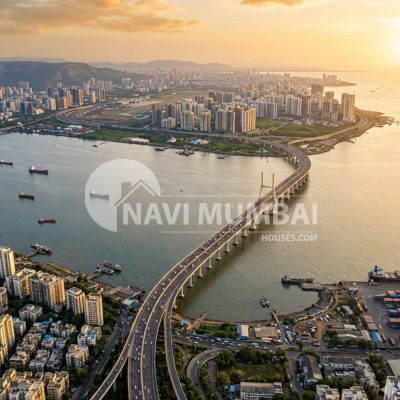
MTHL Property Prices 2026 is becoming one of the hottest topics among real estate investors in Navi Mumbai. As the Mumbai Trans Harbour Link (MTHL) continues to improve connectivity between Mumbai and Navi Mumbai, property buyers are closely watching how infrastructure is influencing prices, rental demand, and future appreciation.
A few years ago, many investors viewed Navi Mumbai as Mumbai’s affordable alternative. Today, that perception is changing rapidly. Improved connectivity, the upcoming Navi Mumbai International Airport, and growing commercial activity are creating new opportunities for investors seeking long-term wealth creation.
However, the real question in 2026 is not whether the bridge has influenced property values. Instead, investors want to know how much growth potential still remains across key locations such as Ulwe, Panvel, Kharghar, and Nerul.
Why the Mumbai Trans Harbour Link Is a Game-Changer
Infrastructure has always been one of the strongest drivers of real estate appreciation. Historically, cities that experience major connectivity improvements witness significant increases in property demand and values. As a result, seasoned investors closely monitor infrastructure developments before making investment decisions.
The Mumbai Trans Harbour Link, India’s longest sea bridge, connects Sewri in Mumbai to Nhava Sheva in Navi Mumbai. Consequently, travel time between the two regions has reduced dramatically.
More importantly, the bridge has achieved much more than simply improving transportation.
It has:
- Enhanced regional connectivity
- Increased residential demand
- Attracted institutional investments
- Boosted commercial development opportunities
- Improved overall market confidence
Furthermore, the MTHL has strengthened Navi Mumbai’s position as an independent economic hub rather than merely an extension of Mumbai.
The Mumbai Trans Harbour Link is one of India’s most significant infrastructure projects. According to the Mumbai Metropolitan Region Development Authority (MMRDA), the bridge has been designed to improve regional connectivity and support economic growth across the Mumbai Metropolitan Region.
Navi Mumbai Real Estate Market in 2026: Current Reality
The Navi Mumbai property market entered 2026 with strong momentum. Unlike earlier growth cycles driven largely by speculation, today’s demand is backed by real infrastructure development and genuine end-user requirements.
On one side, families are searching for larger homes, cleaner surroundings, and a better quality of life. On the other hand, investors are targeting locations with strong appreciation potential and future growth drivers.
Consequently, demand remains robust across several key micro-markets.
Some of the most sought-after locations include:
- Kharghar
- Ulwe
- Panvel
- Nerul
- Dronagiri
- Taloja
In addition, developers continue launching new projects to capitalize on growing buyer interest. This healthy balance between end-user demand and investor participation is creating a sustainable growth environment.
If you’re evaluating different investment destinations, you may also want to explore our detailed guide on best areas to invest in Navi Mumbai in 2026, which compares growth potential across major micro-markets.
Which Areas Are Benefiting the Most from the MTHL?
While the entire Navi Mumbai region has gained from improved connectivity, certain locations are emerging as clear winners.
Ulwe: The Biggest Beneficiary of Infrastructure Growth
Among all micro-markets, Ulwe has attracted exceptional investor attention.
Initially considered a speculative destination, Ulwe is now evolving into a thriving residential market. This transformation has been driven by its strategic location near the Mumbai Trans Harbour Link, the upcoming Navi Mumbai International Airport, and expanding metro connectivity.
As a result, demand has increased significantly.
Moreover, many investors who entered the market several years ago have already witnessed healthy appreciation. Even so, industry experts believe Ulwe’s growth story is far from complete.
Another major factor supporting Ulwe’s growth is the upcoming Navi Mumbai International Airport. Investors can track airport development updates through the Navi Mumbai International Airport Official Website.
Many investors considering Ulwe also compare it with nearby growth corridors. Read our analysis of Ulwe vs Panvel for property investment to understand which location aligns with your investment goals.
Panvel: Navi Mumbai’s Infrastructure Capital
Panvel is no longer simply a transportation junction.
Instead, it is emerging as one of Navi Mumbai’s most important growth centres. Several major infrastructure projects are converging here simultaneously, creating a powerful ecosystem for future development.
Key advantages include:
- Access to MTHL
- Mumbai-Pune Expressway connectivity
- Navi Mumbai International Airport proximity
- Metro expansion
- Industrial and logistics growth
Because of these factors, Panvel continues attracting both residential buyers and long-term investors.
Furthermore, property prices remain relatively affordable compared to many established locations, making entry opportunities attractive even in 2026.
Kharghar: Stability Meets Appreciation Potential
Unlike emerging locations driven primarily by future expectations, Kharghar offers a mature and well-developed ecosystem.
Notably, the area already has:
- Educational institutions
- Healthcare facilities
- Shopping centres
- Corporate offices
- Recreational spaces
At the same time, improved regional connectivity through MTHL has strengthened Kharghar’s appeal even further.
Consequently, investors seeking both rental income and capital appreciation continue to prioritize this location.
Mumbai Trans Harbour Link Impact on Navi Mumbai Property Prices in 2026: What the Data Suggests
The Mumbai Trans Harbour Link Impact on Navi Mumbai Property Prices in 2026 can be observed through several market indicators.
For example:
- Higher buyer enquiries
- Faster inventory absorption
- Increased project launches
- Improved price realization
- Greater investor participation
Historically, infrastructure-led appreciation tends to follow three stages.
Stage 1: Announcement Phase
During this phase, investors enter based on future expectations and anticipated infrastructure benefits.
Stage 2: Construction Phase
As development progresses, market confidence grows and prices begin rising steadily.
Stage 3: Operational Phase
Once infrastructure becomes functional, end-user demand strengthens the market and supports sustainable appreciation.
Today, Navi Mumbai is firmly positioned in the third phase.
Therefore, price growth is increasingly supported by genuine demand rather than speculation alone.
Before investing, buyers should always verify project approvals and compliance details through the MahaRERA Portal to ensure transparency and legal security.
Why Institutional Investors Are Focusing on Navi Mumbai
One of the strongest indicators of future growth is institutional investment activity.
Large developers, investment funds, and corporate occupiers rarely make decisions based on hype. Instead, they focus on long-term economic fundamentals.
Fortunately, Navi Mumbai offers several compelling advantages.
These include:
- MTHL connectivity
- Navi Mumbai International Airport
- Metro expansion
- Commercial growth
- Industrial development
- Population growth
Together, these factors create a strong foundation for future appreciation.
Moreover, institutional participation often signals confidence in a market’s long-term prospects. When large investors commit capital, they typically do so after extensive research and market analysis.
Institutional investors closely monitor infrastructure and economic trends. Detailed reports about India’s housing market can also be accessed through the National Housing Bank (NHB) RESIDEX Reports, which track residential property price movements across major cities.
Rental Demand Is Rising Alongside Property Prices
Many investors focus exclusively on capital appreciation. However, rental income is becoming equally important in today’s market.
As connectivity improves, professionals working in Mumbai are increasingly considering Navi Mumbai as their preferred residential destination.
Consequently, rental demand is rising in locations such as:
- Nerul
- Seawoods
- Kharghar
- Ulwe
- Panvel
In addition, improved connectivity allows residents to enjoy better housing while maintaining access to employment centres.
Therefore, investors may benefit from both rental income and capital appreciation over the long term.
Common Investor Misconceptions
“The Growth Has Already Happened”
This remains one of the most common misconceptions.
In reality, infrastructure projects create economic ecosystems that develop over many years. Although property values have already appreciated, the broader impact continues unfolding.
For instance, business expansion, airport operations, employment growth, and population migration are still accelerating.
As a result, the market may continue benefiting from infrastructure-driven demand for years to come.
“Every Project Will Appreciate Equally”
Not all projects perform the same.
Location quality, developer reputation, construction standards, amenities, and future infrastructure access all influence appreciation potential.
Therefore, investors should focus on project quality rather than simply choosing the lowest-priced option.
“Airport Growth Is Already Priced In”
While some appreciation has undoubtedly occurred, major airports historically create economic activity for decades.
Furthermore, airports stimulate demand across residential, commercial, hospitality, retail, and logistics sectors.
Consequently, the full impact of the Navi Mumbai International Airport may take several years to materialize completely.
Beyond Numbers: Why Investors Are Excited About Navi Mumbai
Every successful investment begins with a vision of the future.
Imagine owning property in a region that is becoming one of India’s most connected urban corridors. Imagine benefiting from the combined impact of a sea bridge, an international airport, metro connectivity, and expanding business districts.
More importantly, imagine participating in a growth story that is still unfolding.
The Mumbai Trans Harbour Link is not merely reducing travel time. Instead, it is reshaping how people live, work, and invest across the Mumbai Metropolitan Region.
Because of this transformation, Navi Mumbai is attracting increasing attention from both domestic and NRI investors.
Should You Invest in Navi Mumbai in 2026?
For investors focused on long-term wealth creation, the fundamentals remain highly attractive.
Several factors support Navi Mumbai’s investment potential. To begin with, infrastructure development remains one of the strongest growth drivers in the region. At the same time, airport-led expansion is expected to generate fresh demand from businesses and homebuyers alike.
In addition, employment opportunities are increasing as commercial activity expands. Consequently, rental demand is strengthening across multiple micro-markets. Meanwhile, property prices still offer better value compared to many established Mumbai locations.
Equally important, commercial development continues to gain momentum, creating a stronger economic ecosystem. As a result, the Mumbai Trans Harbour Link is expected to support long-term property appreciation across several parts of Navi Mumbai.
Therefore, investors looking for a combination of affordability, connectivity, and future growth may find Navi Mumbai particularly attractive in 2026.
Final Thoughts on the Mumbai Trans Harbour Link Impact on Navi Mumbai Property Prices in 2026
The Mumbai Trans Harbour Link Impact on Navi Mumbai Property Prices in 2026 is no longer a prediction—it is already visible across the market.
Property values have strengthened, buyer confidence has increased, and investor interest continues to rise. Furthermore, upcoming infrastructure projects are expected to support the market’s next phase of growth.
At the same time, the Navi Mumbai International Airport, metro expansion, commercial development, and improved regional connectivity are working together to create a powerful investment environment.
Therefore, investors who take a long-term view may still find significant opportunities across Navi Mumbai.
In real estate, wealth is rarely created by following the crowd. Instead, it is often created by identifying transformational infrastructure trends before their full impact becomes obvious to everyone.
For many investors, 2026 could still represent a strategic window to participate in Navi Mumbai’s next chapter of growth.
Furthermore, investors interested in understanding future infrastructure projects in Maharashtra can refer to the CIDCO Official Website for updates on urban development, transport projects, and planning initiatives across Navi Mumbai.


