
What Is OC and CC in Real Estate? Homebuyer’s Guide

What Is OC and CC in Real Estate? This is one of the most important questions every first-time homebuyer should ask before purchasing a property. While many buyers focus on location, amenities, and pricing, they often overlook crucial legal documents that can directly impact their investment.
Buying your first home is exciting. You spend months searching for the right property, comparing prices, checking locations, and planning your future. However, many first-time buyers overlook some of the most important documents involved in a property purchase.
As a result, they may face legal issues, utility connection problems, or difficulties when selling the property later.
This is where OC (Occupancy Certificate) and CC (Completion Certificate) become extremely important.
Although these documents may seem like simple paperwork, they actually protect your investment and give you peace of mind. Therefore, understanding their importance can help you make a safer and smarter home-buying decision.
If you’re planning to buy a flat, apartment, or house, this guide will explain everything you need to know about OC and CC in real estate.
What Is OC and CC in Real Estate?
Before you invest your hard-earned money, you should understand the purpose of these two crucial documents.
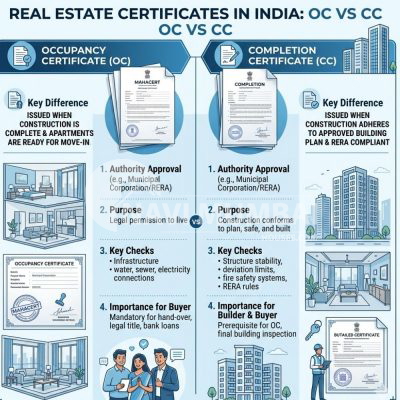
Both certificates come from local municipal authorities. However, they serve different purposes.
While the Completion Certificate confirms that construction is complete, the Occupancy Certificate confirms that the building is safe for occupation.
Let’s understand each one in detail.
What Is a Completion Certificate (CC)?
A Completion Certificate (CC) confirms that the developer completed the building according to the approved construction plan.
The local authority issues this certificate after inspecting the project and verifying that the builder followed the sanctioned plans.
A Completion Certificate confirms that:
- Construction work is complete.
- The building follows approved plans.
- The builder complies with development regulations.
- The project meets required structural standards.
- Authorities approve the completed construction.
In simple terms, a CC tells you that the builder completed the project legally.
What Is an Occupancy Certificate (OC)?
An Occupancy Certificate (OC) confirms that the completed building is safe and ready for people to live in.
After construction ends, authorities inspect the property. They check safety standards, utility services, and regulatory compliance before issuing the certificate.
An Occupancy Certificate verifies that:
- The building is fit for occupation.
- Water supply systems work properly.
- Electricity infrastructure meets standards.
- Fire safety requirements are fulfilled.
- Sewage and drainage systems function correctly.
- The project complies with local regulations.
Simply put, an OC gives residents legal permission to occupy the building.
OC vs CC: Understanding the Difference
Many first-time buyers confuse these documents. However, understanding the difference can help you make a better decision.
| Completion Certificate (CC) | Occupancy Certificate (OC) |
|---|---|
| Confirms construction is complete | Confirms building is fit for living |
| Issued after construction completion | Issued after final inspection |
| Focuses on construction compliance | Focuses on safety and occupancy |
| Required before obtaining OC | Final approval for residents |
Think of it this way:
CC = Construction completed legally
OC = Safe and legal to occupy
Therefore, both certificates play an important role in protecting buyers.
Why OC and CC Matter So Much for First-Time Buyers
Many buyers assume that if a building looks complete, everything must be in order. However, that assumption can lead to costly mistakes.
In reality, legal approvals are just as important as location, amenities, and pricing. Therefore, understanding the importance of OC and CC can help you make a safer property decision.
Let’s look at why these certificates matter.
1. Legal Protection
First and foremost, an Occupancy Certificate confirms that the property complies with local building regulations.
As a result, you gain greater legal security and reduce the chances of facing future complications.
2. Smooth Utility Connections
Moreover, many municipal authorities require an Occupancy Certificate before granting permanent utility connections.
Consequently, residents can access water, electricity, and sewage services without unnecessary delays.
3. Easier Home Loan Processing
In addition, banks and housing finance companies prefer projects with complete approvals.
Therefore, buyers often experience a smoother loan approval process when the property has valid OC and CC documents.
4. Better Resale Value
Furthermore, future buyers usually review legal documentation before making a purchase.
As a result, properties with proper approvals often attract stronger demand and better resale opportunities.
5. Protection Against Unauthorized Construction
Most importantly, valid approvals help buyers verify whether the developer followed the sanctioned building plan.
Therefore, buyers reduce the risk of investing in properties with unauthorized modifications.
Risks of Buying a Property Without an OC
Although a property may appear ready for possession, the absence of an Occupancy Certificate can create serious challenges.
Legal Complications
Without an OC, authorities may question the building’s occupancy status.
Consequently, residents may face legal uncertainties in the future.
Difficulty During Resale
Similarly, future buyers often hesitate when they discover that a property lacks essential approvals.
Therefore, selling the property can become more difficult.
Loan Challenges
Moreover, some financial institutions conduct strict legal checks before approving loans.
As a result, financing options may become limited.
Utility-Related Issues
In some cases, authorities may delay permanent utility connections.
Consequently, residents may depend on temporary arrangements for longer than expected.
Reduced Buyer Confidence
Perhaps most importantly, missing approvals can raise concerns about the project’s compliance status.
Therefore, many buyers prefer properties with valid OC and CC documentation.
Moreover, buyers should verify all legal documents before making a final decision. You may also find our guide on Important Property Documents to Check Before Buying a Flat useful when conducting due diligence.
A Real-Life Example
Imagine you are comparing two apartments in the same neighborhood.
Apartment A
- Lower price
- Ready-to-move property
- No Occupancy Certificate
Apartment B
- Slightly higher price
- Valid OC and CC
- Legally compliant project
At first glance, Apartment A may seem like a better deal. However, the lower price could hide future risks.
On the other hand, Apartment B provides stronger legal protection, smoother financing options, and greater resale potential.
Therefore, spending slightly more today could save you significant problems tomorrow.
How to Check OC and CC Before Buying
Fortunately, verifying these documents is not difficult.
Ask the Builder
First, request copies of:
- Occupancy Certificate
- Completion Certificate
- Approved Building Plan
- RERA Registration Details
A genuine developer should provide these documents without hesitation.
Verify Through Local Authorities
Additionally, many municipal corporations offer online portals where buyers can verify project approvals.
Therefore, you can independently confirm the authenticity of the documents.
Review RERA Information
Furthermore, buyers should review project details on the state’s RERA website.
This step helps verify project approvals and compliance records.
Furthermore, buyers should verify project details on the official MahaRERA website. This simple step helps confirm project approvals, registration status, and compliance records before investing.
Consult a Trusted Real Estate Expert
Finally, seek guidance from an experienced and trustworthy real estate consultant.
A professional advisor can identify documentation issues before they become costly problems.
Why Working With a Genuine Real Estate Agent Matters
Buying property involves much more than selecting a location and negotiating a price.
In fact, legal verification often determines whether your investment remains safe in the long run.
A genuine real estate agent can help you:
- Verify project approvals
- Check OC and CC documents
- Review legal compliance
- Understand builder credentials
- Avoid hidden risks
- Make informed decisions
As a result, you gain confidence throughout the buying process.
In addition, buyers can cross-check project information using official government resources such as the RERA portal and the Ministry of Housing and Urban Affairs website. As a result, they can make more informed decisions and reduce investment
Additionally, first-time buyers should understand the complete property-buying process. Our article on the Step-by-Step Home Buying Process in Navi Mumbai can help you avoid common mistakes and make informed decisions throughout your purchase journey.
Frequently Asked Questions
Is a Completion Certificate enough?
No. A Completion Certificate confirms that construction is complete. However, an Occupancy Certificate confirms that people can legally occupy the building.
Can I buy a flat without an OC?
You can. However, doing so may expose you to legal, financial, and resale-related risks.
Do banks check OC and CC?
Many lenders review project approvals before sanctioning loans. Therefore, valid documentation often improves financing prospects.
Does OC affect resale value?
Yes. Buyers generally prefer properties with proper approvals because they offer greater confidence and legal clarity.

Final Thoughts
Buying your first home is exciting. However, smart buyers look beyond attractive brochures and sample flats.
After all, a home is not just an emotional investment—it is also a major financial commitment. Therefore, verifying legal documents should always be part of your buying process.
Before you finalize any property, make sure you check both the Completion Certificate (CC) and the Occupancy Certificate (OC). Together, these documents confirm that the project follows approved plans and is safe for occupation.
Moreover, proper documentation can protect you from future legal disputes, financing issues, and resale challenges.
Ultimately, your dream home should offer peace of mind along with comfort and convenience. Therefore, always ask one simple question before you buy:
“Does this property have a valid OC and CC?”
That single question can save you from years of unnecessary stress and help you invest with confidence.
If you are planning to purchase a home in Navi Mumbai, don’t miss our Navi Mumbai Property Buying Guide 2026, where we cover location selection, legal verification, home loans, and investment tips for first-time buyers.