
How to Pick the Best Floor in a Navi Mumbai High-Rise — Expert Advice for First-Time Buyers
Choosing the best floor in a Navi Mumbai high-rise is one of the most important decisions you’ll make when buying your first home. While most buyers compare locations, builders, and apartment prices, they often overlook how the floor they choose can affect their lifestyle, comfort, resale value, and future investment returns. In a city where modern residential towers are becoming increasingly popular, selecting the right floor is just as important as selecting the right project.
Whether you’re looking for better ventilation, panoramic views, lower noise levels, or stronger resale potential, every floor offers unique advantages and disadvantages. Therefore, understanding these differences before booking your apartment can help you make a smarter financial decision. Moreover, choosing the right floor today can improve your everyday living experience while increasing the long-term value of your property.Official information about the airport development

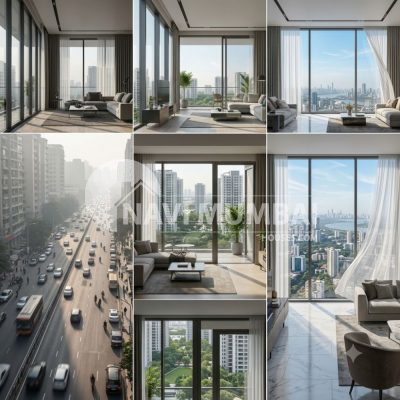
Why Floor Selection Matters More Than Most Buyers Realize
Many first-time buyers believe that every apartment in the same building offers a similar living experience. However, that’s rarely the case. The floor you choose can affect everything from your daily comfort to your property’s future market value.
For example, your apartment’s height can influence:
- Natural ventilation
- Amount of sunlight
- Privacy
- Noise levels
- Pollution exposure
- Scenic views
- Lift dependency
- Emergency accessibility
- Rental demand
- Future resale value
As a result, choosing the right floor is just as important as selecting the right locality or builder.
Which Floor Is The Best In A High-Rise Building?
The Rise of High-Rise Living in Navi Mumbai
Over the past few years, Navi Mumbai has witnessed tremendous residential growth. Thanks to major infrastructure projects such as the Navi Mumbai International Airport, Atal Setu, Metro connectivity, and improved road networks, developers are launching taller residential towers across the city.
Today, areas like Kharghar, Ulwe, Panvel, Seawoods, Nerul, Ghansoli, Airoli, and Taloja feature modern buildings ranging from 20 to 45 floors or even higher.
Consequently, buyers now have far more options than ever before. Instead of simply selecting an apartment, they must also decide which floor best suits their lifestyle and financial goals.
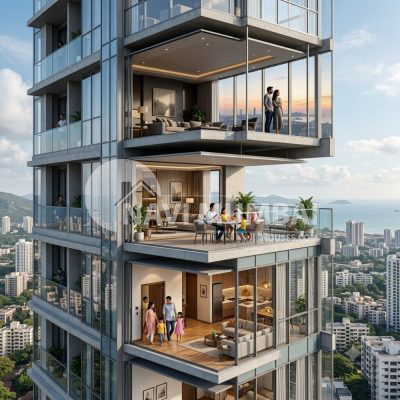
Understanding Different Floor Categories
Every floor has its own advantages and drawbacks. Therefore, understanding these differences will help you make a practical decision rather than an emotional one.
Lower Floors (1st to 5th Floor)
Lower-floor apartments remain popular among many homebuyers because they provide quick access and greater convenience.
These floors are especially suitable for:
- Senior citizens
- Families with young children
- People who frequently travel
- Buyers uncomfortable with heights
Advantages
- Easy access without relying heavily on lifts
- Faster evacuation during emergencies
- Convenient for carrying groceries and daily essentials
- Lower floor-rise premium in many projects
Disadvantages
On the other hand, lower floors may experience:
- More traffic noise
- Increased dust levels
- Reduced privacy
- Limited city views
- Greater exposure to vehicle pollution
Nevertheless, they remain an excellent choice for buyers prioritizing accessibility over panoramic views.
Mid Floors (6th to 15th Floor)
Real estate professionals often recommend mid-level floors because they strike an ideal balance between convenience and comfort.
For first-time buyers, these floors usually provide the best overall living experience.
Benefits
- Better airflow throughout the year
- More natural sunlight
- Reduced outside noise
- Comfortable lift travel
- Strong resale demand
- Balanced pricing
Moreover, these apartments generally avoid the disadvantages associated with both extremely low and extremely high floors.
For this reason, many families consider mid-level apartments the safest long-term choice.
Higher Floors (16th Floor and Above)
Higher floors appeal to buyers seeking premium lifestyles and spectacular views.
In addition to offering impressive surroundings, they often provide a quieter environment.
Advantages
- Panoramic skyline views
- Better cross ventilation
- Greater privacy
- Less pollution
- More sunlight
- Premium lifestyle appeal
Furthermore, homes located on upper floors often command higher resale values in premium developments.
Potential Drawbacks
Despite these advantages, higher floors may not suit every buyer.
Some common challenges include:
- Longer lift waiting times
- Dependence on elevators
- Higher floor-rise charges
- Strong winds during monsoon
- Slightly longer evacuation time during emergencies
Therefore, buyers should evaluate whether these premium features justify the additional cost.
Is the Highest Floor Always the Best?
Many first-time buyers assume that purchasing the highest available floor automatically guarantees the best investment.
However, this isn’t always true.
Although premium floors usually offer excellent views, property appreciation depends on several other factors.
For instance, resale value is influenced by:
- Location
- Builder reputation
- Infrastructure development
- Apartment layout
- Project amenities
- Maintenance quality
- Market demand
Consequently, paying a large premium for the top floor may not always deliver proportionately higher returns.
Instead, buyers should compare the additional cost with the actual lifestyle benefits they expect to receive.
Understanding Floor-Rise Charges
Most developers follow a floor-rise pricing system.
In simple terms, apartments become more expensive as the floor level increases.
Typically, builders charge:
- ₹25–₹150 per square foot extra per floor
Although the exact premium varies by project, the additional cost can easily reach several lakhs for larger apartments.
Therefore, always ask the builder:
- What is the floor-rise premium?
- Is it fixed or negotiable?
- Does it include better views?
- Are there any additional maintenance charges?
Knowing these details beforehand helps you avoid unexpected expenses.
Key Factors to Consider Before Choosing a Floor
1. Ventilation
Fresh air plays a major role in everyday comfort.
Generally, apartments located on mid and higher floors receive better cross ventilation because surrounding buildings are less likely to block airflow.
As a result, residents often rely less on air conditioning, which may reduce electricity costs over time.
2. Natural Light
Sunlight makes any home feel brighter and healthier.
Higher floors usually receive more daylight throughout the day because there are fewer obstructions nearby.
Moreover, natural lighting improves indoor aesthetics while reducing dependence on artificial lights.
3. Noise Levels
Noise pollution can significantly affect your quality of life.
Apartments located closer to the ground usually experience sounds from traffic, construction activities, and commercial establishments.
By contrast, homes situated on higher floors remain much quieter, creating a more peaceful living environment.
4. Privacy
Privacy is another important consideration.
Since upper-floor apartments are farther from roads and neighboring buildings, residents generally enjoy greater personal space.
Additionally, fewer people pass by windows or balconies, making everyday living feel more comfortable.
5. Lift Efficiency
When buying an apartment in a high-rise, don’t overlook the lift system. Even the most beautiful apartment can become inconvenient if the building has inadequate elevators.
Before booking your home, ask the builder:
- How many passenger lifts are available?
- Is there a separate service lift?
- Is there a power backup for all lifts?
- What is the lift-to-apartment ratio?
- How long is the average waiting time during peak hours?
Moreover, buildings with well-planned lift systems usually provide a smoother living experience and maintain better resale value.
Fire Safety Should Never Be Ignored
Many first-time buyers hesitate to purchase apartments on higher floors because of fire safety concerns. Fortunately, modern residential towers in Navi Mumbai follow strict fire safety regulations.
Most reputed projects include:
- Fire-resistant staircases
- Automatic sprinkler systems
- Smoke detectors
- Fire alarms
- Refuge areas
- Emergency exits
- Backup power systems
Nevertheless, don’t rely solely on marketing brochures. Instead, ask the builder to explain the project’s fire safety features before making your final decision.
Which Floor Is Best for Families?
Families generally prefer apartments between the 6th and 12th floors, and for good reason.
These floors offer:
- Better ventilation
- Reduced traffic noise
- Comfortable lift access
- Good natural lighting
- Enhanced privacy
- Excellent resale demand
Furthermore, parents often find this range ideal because it balances convenience with a pleasant living environment.
If you have elderly family members, however, choosing a slightly lower floor may provide additional comfort without compromising too much on lifestyle.
Which Floor Is Best for Investors?
Investment decisions should focus on future demand rather than personal preferences.
From an investment perspective, mid-level and upper-mid-level floors usually attract the largest number of buyers and tenants.
As a result, these apartments often enjoy:
- Better rental demand
- Faster resale
- Competitive appreciation
- Wider buyer interest
Although premium upper floors may command higher prices, they also require a larger initial investment. Therefore, investors should compare the purchase premium with the expected long-term returns before making a decision.
Common Myths About High-Rise Floors
Many homebuyers rely on myths instead of facts while selecting a floor. Let’s separate fact from fiction.
Myth 1: The Highest Floor Is Always the Best
This isn’t necessarily true.
While upper floors offer excellent views, they also come with higher floor-rise premiums and greater dependence on lifts. Therefore, the best floor depends on your budget, lifestyle, and future plans.
Myth 2: Lower Floors Are Unsafe
Modern residential projects include CCTV surveillance, gated security, access control, video door phones, and professional security staff.
Consequently, safety depends far more on the quality of the building’s security systems than on the floor you choose.
Myth 3: Higher Floors Always Have Better Resale Value
Although premium floors attract certain buyers, resale value depends on several additional factors.
For example:
- Project location
- Builder reputation
- Connectivity
- Infrastructure development
- Apartment layout
- Building maintenance
- Market demand
Therefore, selecting the right project remains more important than simply choosing the highest floor.